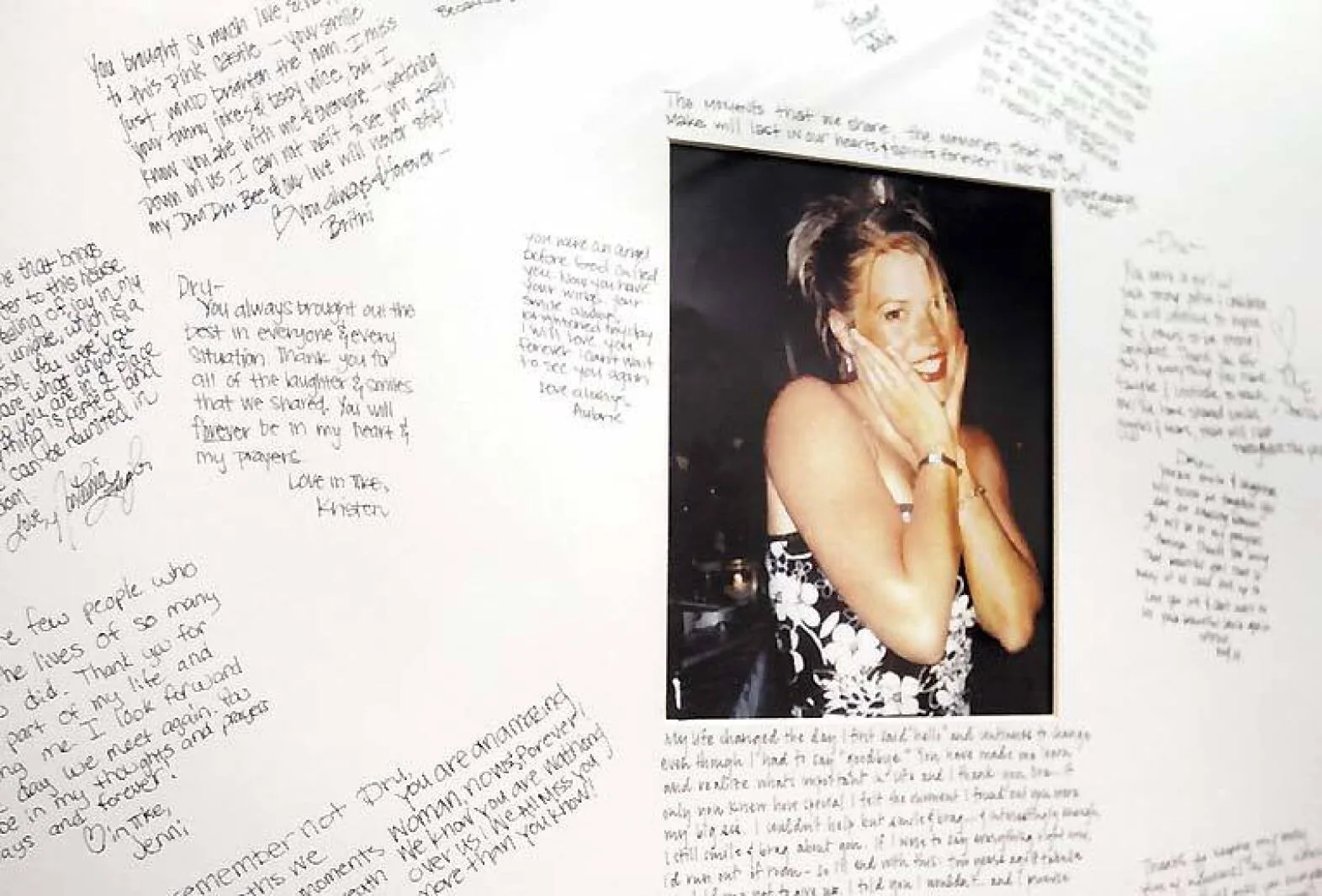
GRAND FORKS, ND — Two decades after Dru Sjodin was kidnapped from a Grand Forks mall parking lot, the case still stands as one of the most consequential federal prosecutions in North Dakota history. The death sentence that followed did not bring closure for her family, and the legal aftermath stretched across years of appeals, public attention and policy changes.
The case began with a disappearance that triggered an immense search in freezing weather and eventually led investigators to Alfonso Rodriguez, a repeat violent sex offender from Crookston, Minnesota. After Rodriguez was arrested, federal prosecutors pursued a death penalty trial that consumed millions of dollars and drew national interest because of both the facts and the punishment options jurors had to consider.
How the search for Dru Sjodin unfolded after the mall abduction
Sjodin disappeared after being abducted from the parking lot of a mall in Grand Forks. In the days that followed, thousands of people searched hundreds of square miles in bitter cold, trying to find any sign of her. The effort became one of the region’s most intense missing-person searches, with family members, volunteers and law enforcement all focused on the same urgent question.
At the time, rumors circulated about a man who had been seen around the nightclub where Sjodin worked. That tip did not lead to an immediate breakthrough, but it did prompt a wider look at sex offenders in Minnesota. That search led investigators and reporters to Rodriguez, whose history and recent release made him a person of interest as the case developed.
The investigation moved quickly enough that police were already inside Rodriguez’s mother’s home on Thanksgiving 2003, a detail that later emerged during his trial. By then, the family and the public were still waiting for answers, and investigators were still piecing together what had happened after the abduction.
The phone call that led to a major break in the case
One of the most striking moments in the early coverage came through a brief phone call placed to a home in Crookston on the eve of Thanksgiving. During a one-minute conversation, a question about whether police had questioned Alfonso in Sjodin’s disappearance was met with a simple “No comment.” That exchange lingered because it came while officers were already at the house, information that was not known at the time.
Days later, a call came from law enforcement notifying the family and the media that Rodriguez had been arrested. The timing was awkward and emotional, arriving just as members of Sjodin’s family were trying to gather and eat after days of searching and uncertainty. The arrest was soon announced on television, breaking into Monday Night Football and signaling that the investigation had reached a major turning point.
For Sjodin’s parents, Allan Sjodin and Linda Walker, the arrest brought movement in a case that had already become overwhelming. But it did not end the grief or resolve the wider questions about what had happened to their daughter.
Why the federal trial became a landmark death penalty case
If jurors concluded Rodriguez had kidnapped and murdered Sjodin, they would then decide whether he qualified for the death penalty before weighing life in prison or execution. That structure made the case especially significant, and the jury selection process reflected the stakes.
U.S. District Judge Ralph Erickson oversaw an extensive screening that began with about 1,500 prospective jurors. A questionnaire reduced that pool to 580 people, and those candidates then filled out a 121-question form before individual interviews began. More than 230 interviews took place over 21 days before a jury was finally seated.
The process was demanding but widely viewed as careful and fair. Legal experts later praised the approach, and courts around the country adopted similar methods. The courtroom rules also limited access, requiring anyone present for selection to arrive before interviews started and otherwise restricting public access to breaks.
A trial watched closely and documented in detail
During jury selection, detailed notes were taken on prospective jurors, including names, physical descriptions and answers given in court. That information was entered into a spreadsheet at the end of each day so selected jurors could later be identified and contacted for comment after the trial.
Being the only member of the public or media to attend the full selection process gave the proceedings an unusual level of documentation. The routine of sitting through hours of questioning underscored how much attention the case drew from those who were following the legal process closely, even before the trial itself began.
The trial eventually became North Dakota’s only federal death penalty case, a distinction that still marks it two decades later. The details presented in court were described as horrific and deeply painful, adding to the emotional toll on everyone connected to the case.
The law and public costs that followed Sjodin’s death
Rodriguez was ultimately sentenced to death, but that sentence was later repealed, and he is now serving life in a Florida prison. According to the account of the case, he never accepted responsibility or expressed remorse. The legal fight did not stop with the verdict and sentence; appeals continued, and the costs kept growing.
Defense lawyers and prosecutors spent millions of taxpayer dollars on the trial, and millions more went to the appeals that followed. The financial burden was one part of a much larger public reckoning around the case, which was watched not only as a murder prosecution but also as a test of the federal death penalty system.
The impact extended beyond the courtroom. Sjodin’s death helped spur the creation of the Dru Sjodin National Sex Offender Registry and led to broader civil commitment reform across the country. Her case became part of a larger policy response tied directly to the violence that took her life.
A family settlement and a legacy that remains painful
In 2007, Minnesota reached a settlement with Sjodin’s parents, though state officials did not admit wrongdoing, liability or any legal violations. The settlement closed one chapter of the public aftermath, but it did not erase the personal loss or the years of public scrutiny the family had already endured.
Even now, the case is remembered less for the punishment imposed on Rodriguez than for the life Sjodin lived and the permanence of her absence. Her family’s grief remained tied to a case that was both highly visible and deeply personal, with no legal outcome capable of fully addressing that loss.
Her legacy endures through the law, the debate over federal capital punishment and the memory of a young woman whose death changed policy and left a lasting mark on the region.